Saddle-Stitch
Saddle-Stitch is a traditional hand-stitching technique widely regarded as the hallmark of high-quality leather craftsmanship. Unlike machine stitching, where a single thread passes through the leather in one direction, saddle stitch uses two needles working in tandem, passing through each hole from opposite sides. This creates a stitch that is symmetrical on both sides of the leather, producing a uniform and aesthetically pleasing pattern.
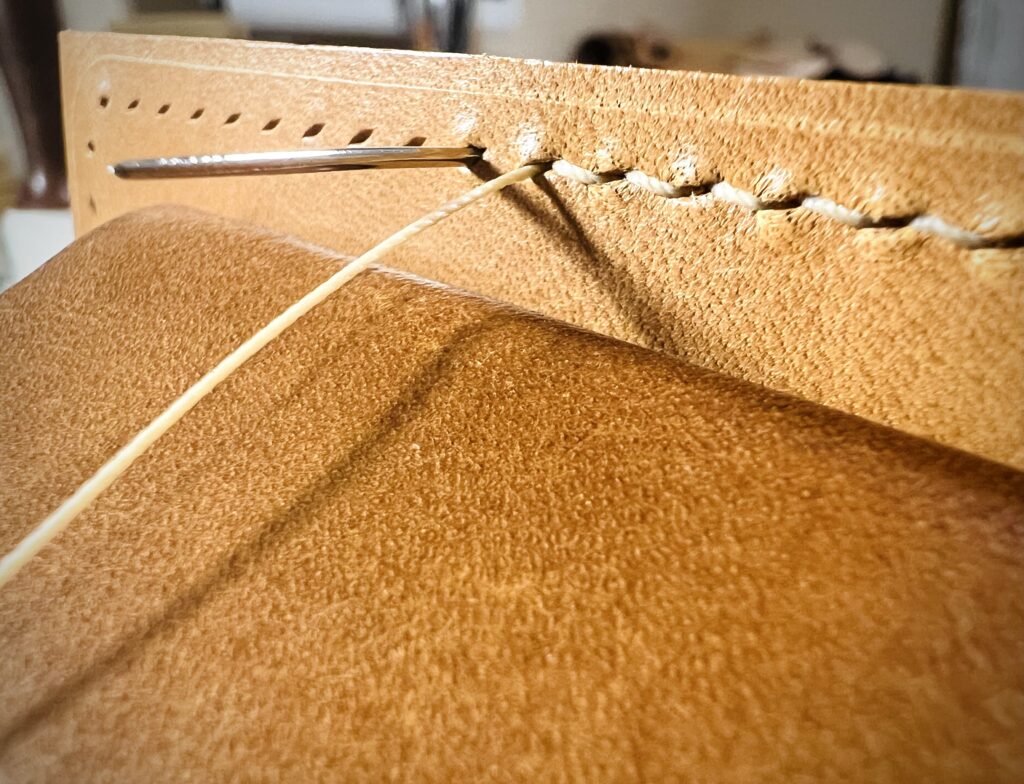
The technique requires patience, precision, and experience. Each stitch is individually sewn, ensuring that even if one stitch is cut or damaged, the rest of the seam remains intact—a feature that significantly enhances the durability and longevity of the leather product. This makes saddle-stitched items particularly suitable for pieces that endure frequent use, such as wallets, belts, bags, and other everyday leather goods.
In addition to its functional advantages, saddle stitching is celebrated for its visual appeal. The uniformity and symmetry of the stitches convey meticulous craftsmanship, adding a refined, handcrafted character to the piece. For many leather artisans, the saddle stitch is more than just a technique—it is a signature of skill, dedication, and respect for traditional methods passed down through generations.
Key Features of Saddle Stitch:
•Durability: Each stitch is locked in place from both sides, preventing seam failure.
•Symmetry: The stitch pattern is identical on both front and back, creating a balanced and elegant appearance.
•Handcrafted Quality: Requires skilled manual labor, highlighting artisanal expertise.
•Aesthetic Appeal: Adds a distinct handcrafted character, enhancing the visual value of leather goods.
Saddle stitching embodies the fusion of function and artistry, making it a defining feature of fine leatherwork and a trusted choice for pieces meant to last a lifetime.
Dual Side Stitch vs Ordinary Saddle Stitch
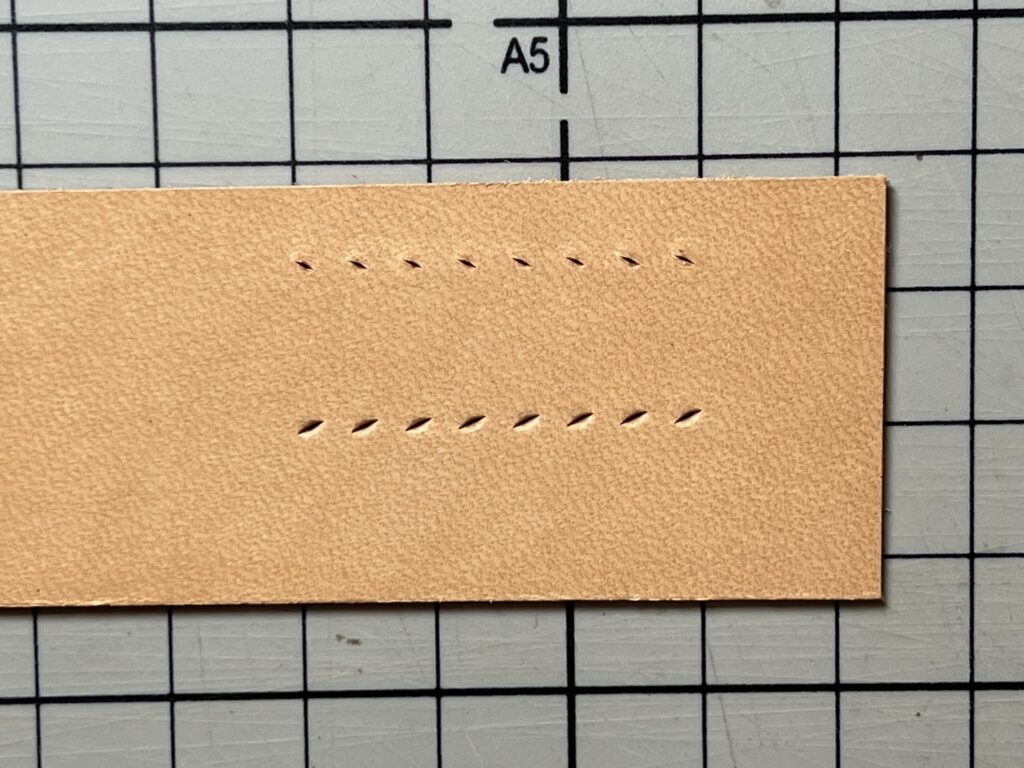
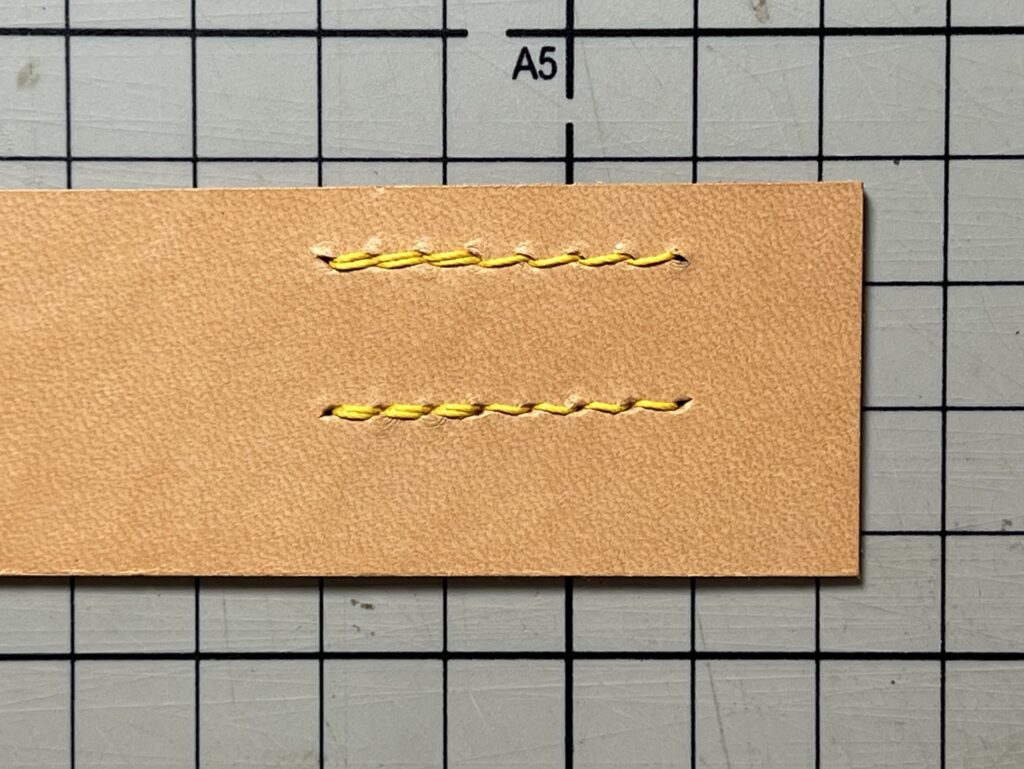
From these two images, we can observe that the front-side pricking (bottom row) and the back-side pricking (top row) are different. The front-side pricking is more rounded, and the two rows are angled in opposite directions. Additionally, in standard saddle stitching, the stitches on the back side appear slightly stiffer compared to the front.

As shown, in the dual-side saddle stitch technique, both sides of the leather are pierced separately.
For the best visual effect, I use the dual-side saddle stitch in almost all cases, except for a few internal seams that are less visible. This is also my way of showing respect for a piece of high-quality leather.