About the Leathers
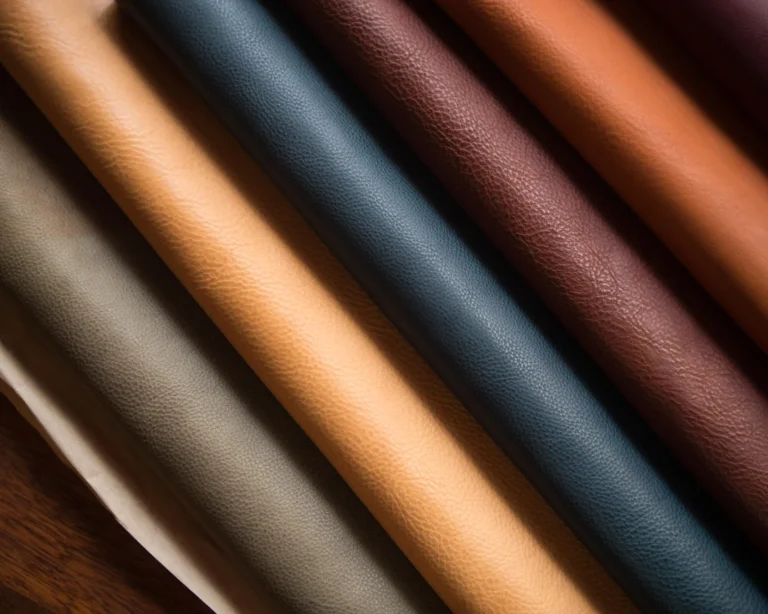

Leather: a World of Misleading Labels
In today’s market, the word “leather” is used loosely.
From genuine leather to vegan leather, from full grain to synthetic coatings, many terms sound authentic but often hide major differences in quality.
“Genuine Leather” sounds premium, but in most cases, it simply means: The material contains some real leather, it does not indicate high grade.
In practice, genuine leather often refers to:
- Bonded leather made from leather fibers and adhesives
- Split leather coated with synthetic layers
- Heavily processed low-grade hides
These materials are legally allowed to be labeled as leather, but they lack the strength and aging qualities of full grain leather.
- Low-cost
- Easy to mass-produce
- Visually uniform
Understanding Grain: Full Grain, Top Grain, and Beyond
The “grain” refers to how much of the original hide surface remains.
- Full Grain Leather is the top layer of the hide, left completely intact. — The Highest Grade
- Top Grain leather has its surface lightly sanded to remove imperfections. — High Grade
- Split Leather & Corrected Grain are made from the lower layers of hide, often with coating on the surface. — Lower Grades
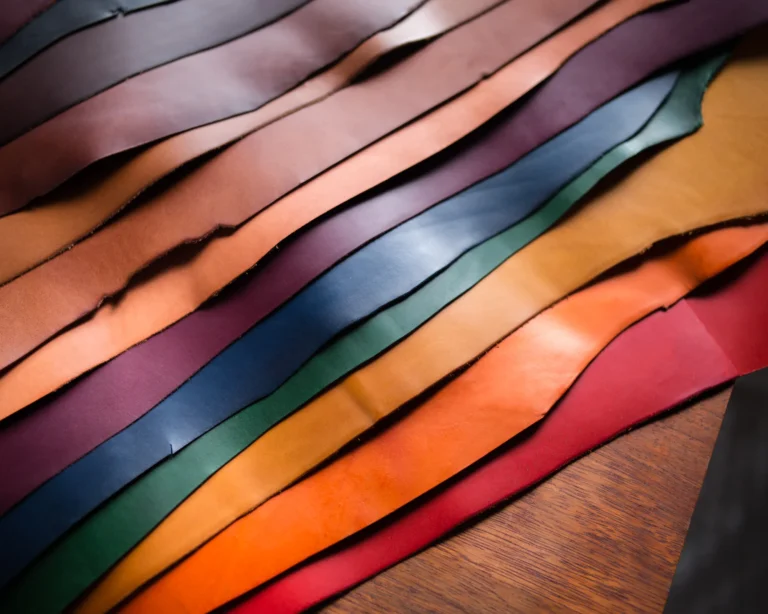
Vegetable-Tanned Leather
We know that animal hides must go through a tanning process before they can become usable leather.
Vegetable tanning, in contrast to chrome tanning, is a traditional method that was widely used before the era of industrial mass production.
As its name implies, vegetable-tanned leather is tanned with natural tannins extracted from plants, and it typically preserves the hide’s original full-grain surface.
Unlike chrome-tanned leather—which is optimized for mass production—vegetable-tanned leather preserves the natural fiber structure and grain of the hide. It responds exceptionally well to handcrafting, and its surface gradually develops a rich patina through use.
Why I Work Vegetable-Tanned Leather
- clean, crisp edge work
- long-lasting hand-stitched construction
- natural patina development
- honest materials that improve with age
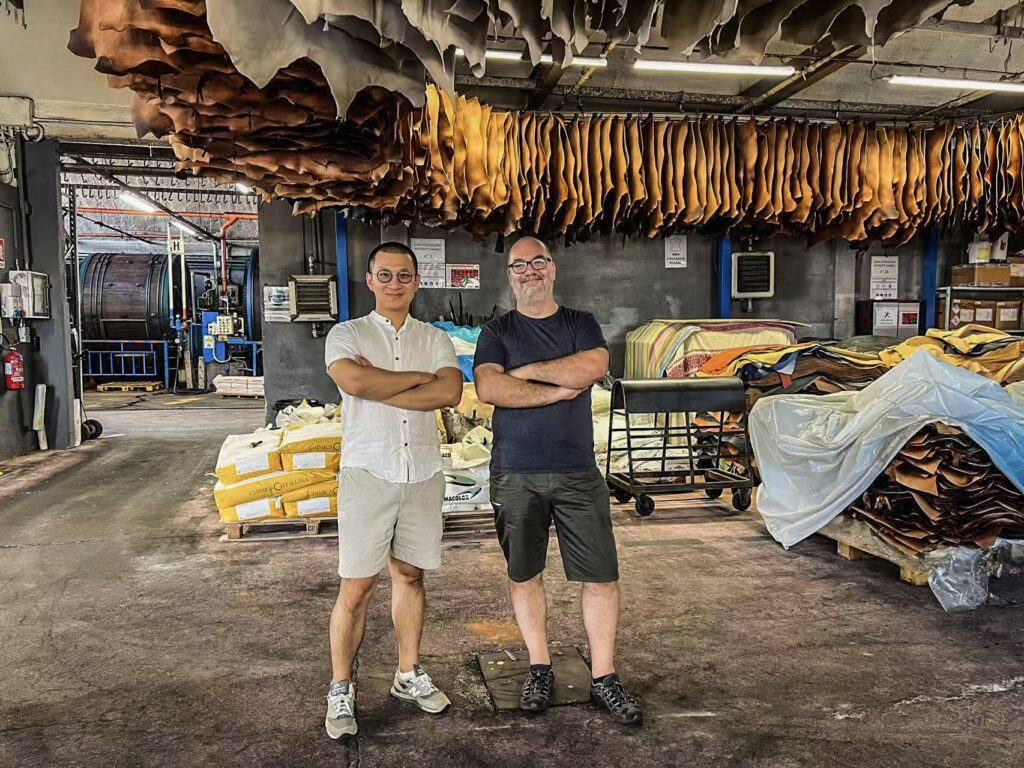
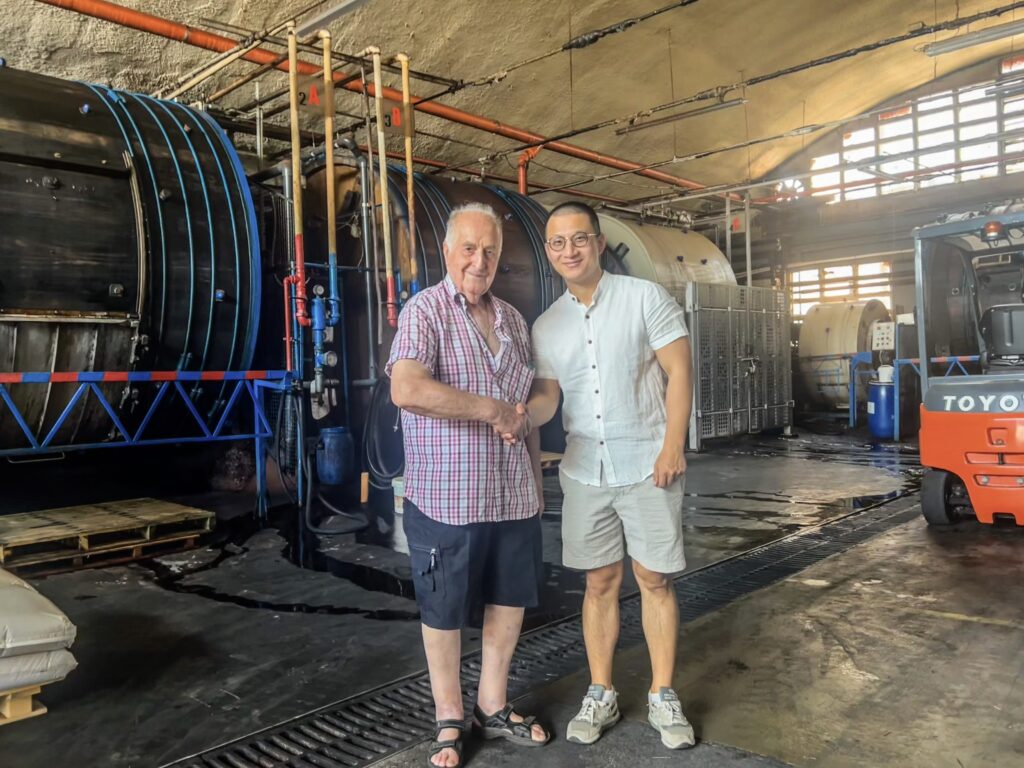
Consortium of Vegetable-Tanned Leather in Tuscany
The vegetable-tanning tradition in Tuscany has developed over several centuries, forming a highly refined craft culture rooted in family-run tanneries and long-established techniques.
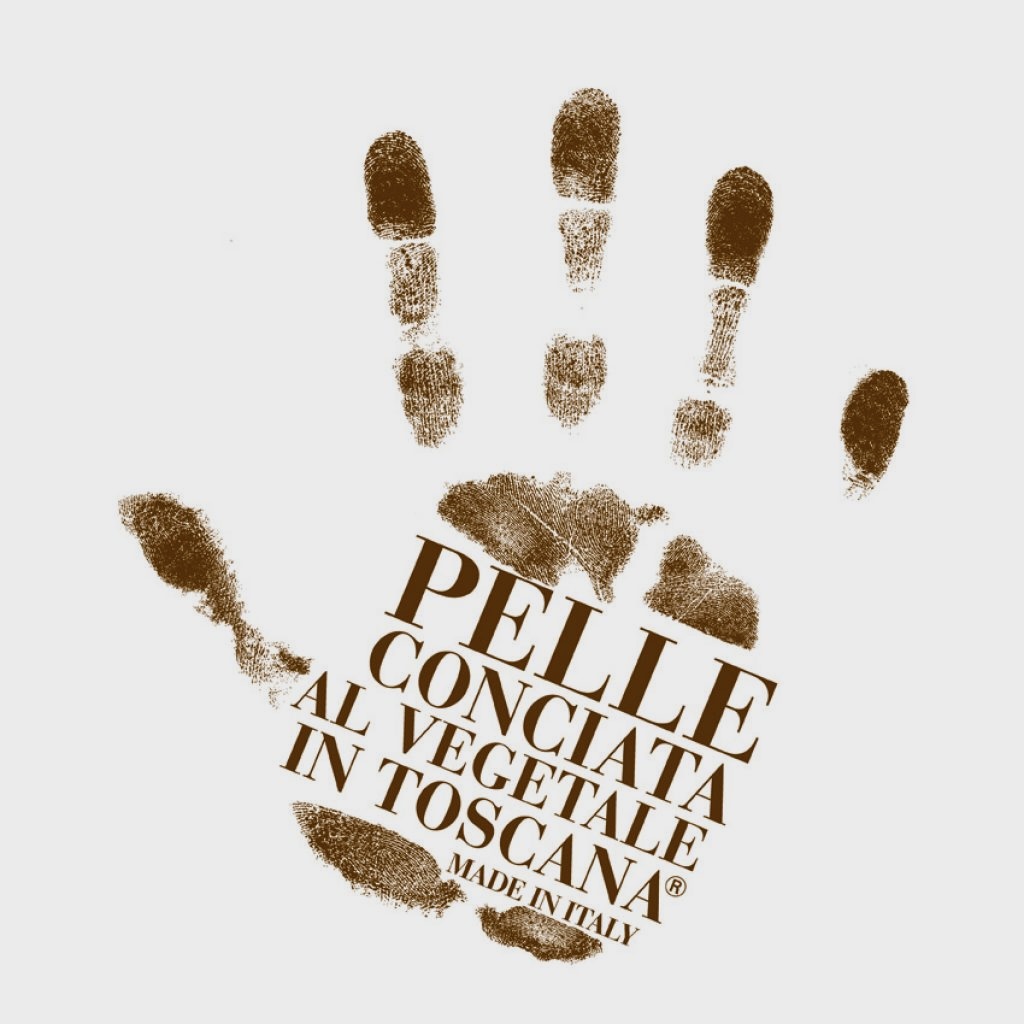
The Pelle Conciata al Vegetale in Toscana — the Consortium of Italian Vegetable-Tanned Leather — was founded in 1994 by a small group of Tuscan tanneries dedicated to preserving the region’s centuries-old tanning tradition. Over time, the consortium has grown to include more than twenty member tanneries, all located in the historic leather-tanning district between Florence and Pisa—the only Italian region specialized in producing premium vegetable-tanned leather.
These tanneries craft 100% natural, vegetable-tanned hides, using time-honored methods that require patience, skill, and deep artisanal knowledge. The result is leather that combines tradition and modern craftsmanship, adaptable to a wide range of high-quality leather goods. And we can recognise them by the distinctive hand-shaped certification mark.
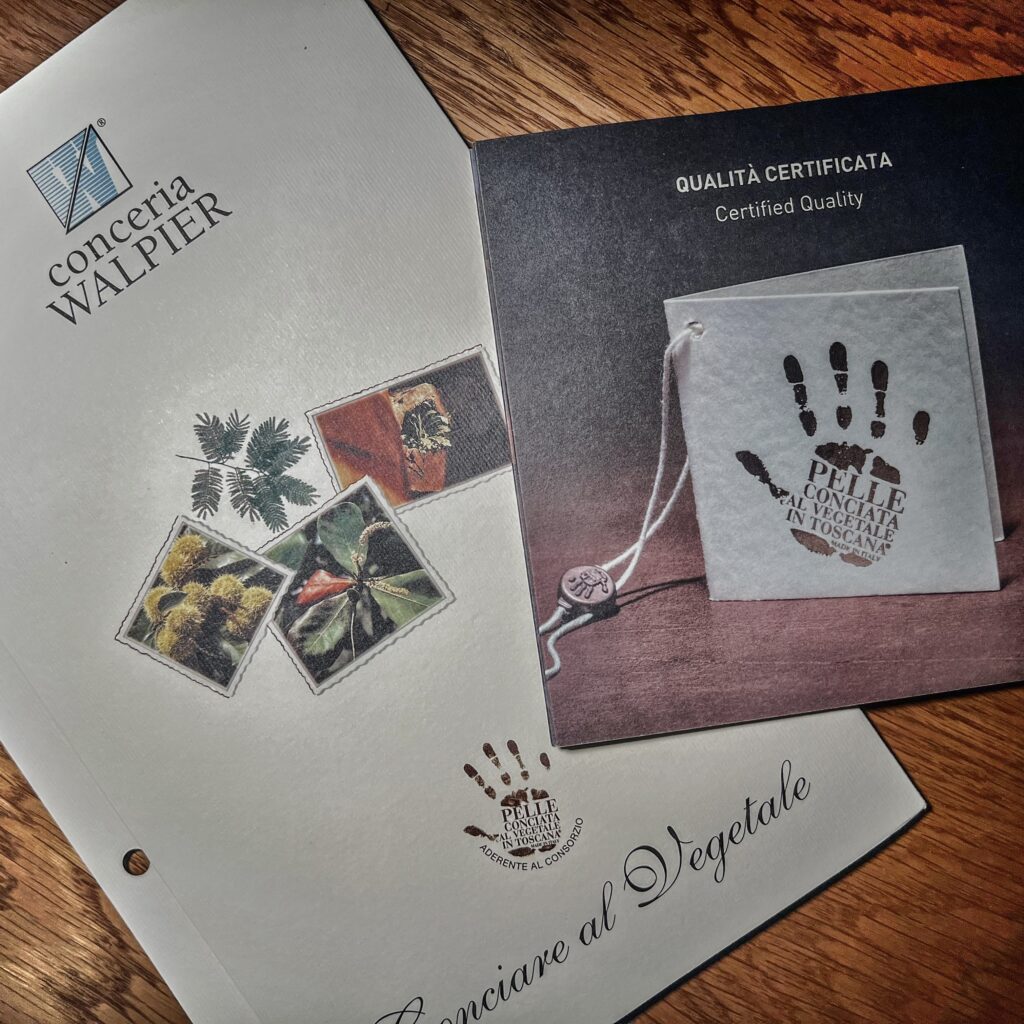
- Conceria Walpier — In its natural shade, Article Buttero is the vegetable-tanned leather I use most often. It has a firm, structured temper, a warm natural sheen, and develops an exceptional patina that deepens beautifully with use. Widely regarded in the hand-stitched leathercraft community for its outstanding performance, Buttero offers both durability and refined aesthetics that continue to improve over time.
- Badalassi Carlo — Among all pebbled vegetable-tanned leathers, Minerva Box and its refined variant, Minerva Box Luxury, are my personal favorites. Both leathers feature naturally formed, fine-grained textures achieved through the traditional “vacchetta” vegetable-tanning process. They offer an exceptionally supple handfeel, making them ideal for leather goods that benefit from a softer and more flexible structure.
- La Perla Azzurra — Old England is one of La Perla Azzurra’s signature vegetable-tanned leathers, known for its distinctive hand-rubbed finish and rich, traditional character. The surface carries subtle tonal variations created through meticulous manual processing, giving each piece a naturally aged, heritage-inspired appearance straight out of the tannery.